
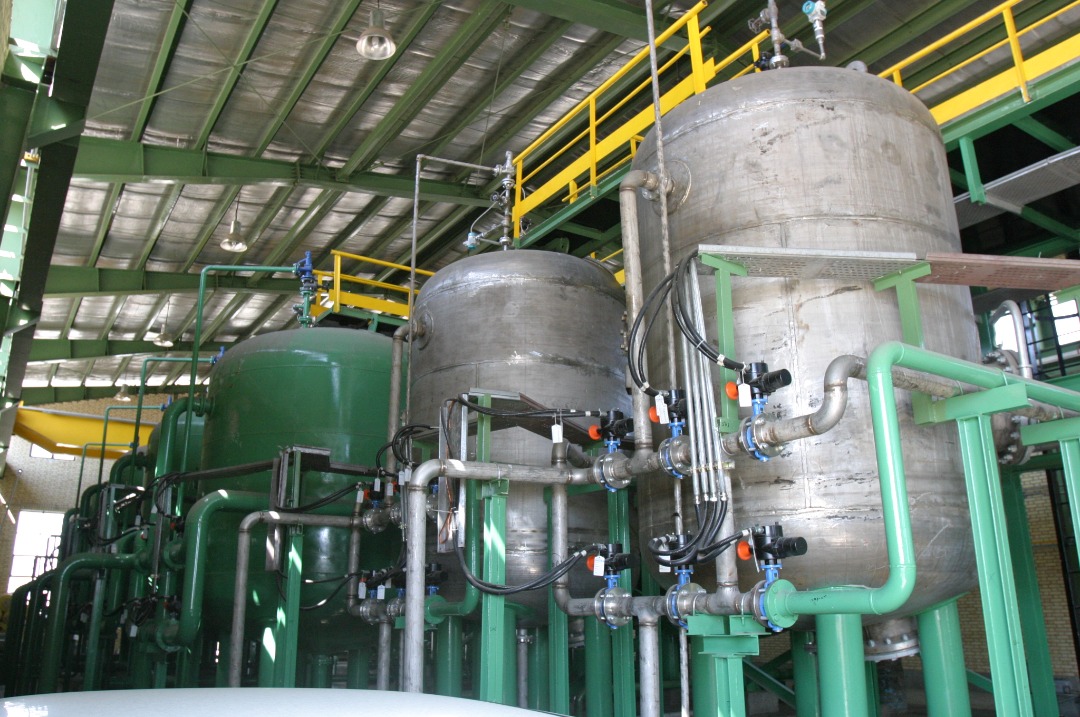
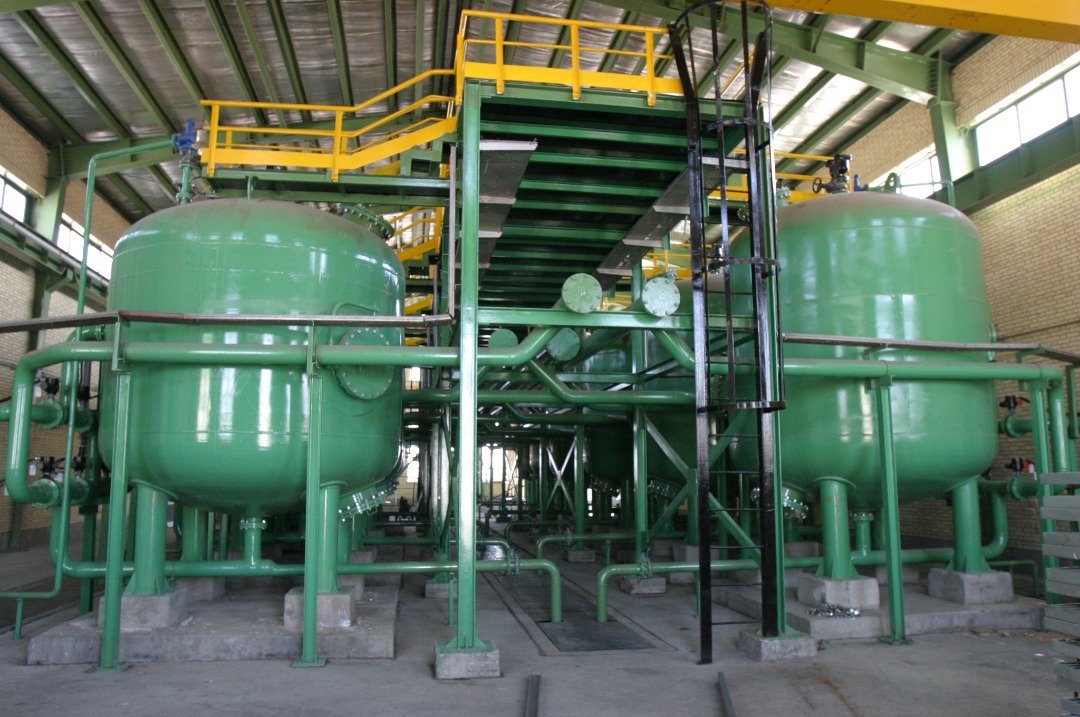

Activated Carbon and Sand Filter
Carbon filtering is a method of filtering that uses a piece of activated carbon to remove contaminants and impurities, utilizing chemical adsorption. Each piece of carbon is designed to provide a large section of surface area, in order to allow contaminants the most possible exposure to the filter media. This carbon is generally activated with a positive charge and is designed to attract negatively charged water contaminants. Carbon filtering is commonly used for water purification, but is also used in air purifiers.
Carbon filters are most effective at removing chlorine, sediment, and volatile organic compounds (VOCs) from water. They are not effective at removing minerals, salts, and dissolved inorganic compounds.
Application
Typical particle sizes that can be removed by carbon filters range from 0.5 to 50 micrometres. The particle size will be used as part of the filter description. The efficacy of a carbon filter is also based upon the flow rate regulation. When the water is allowed to flow through the filter at a slower rate, the contaminants are exposed to the filter media for a longer amount of time.


